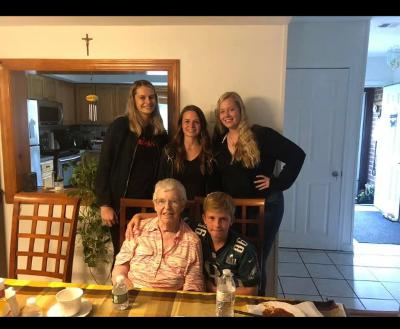
One of the hardest parts of growing up is the moment the roles reverse, and you become the caregiver for your own parent.
I can’t pinpoint the exact moment the decline started. My father passed away relatively young from cancer, and my mother carried the weight of his care until the end. For a long time after he was gone, she remained vibrant. She drove, she had a busy social life, she attended daily Mass, and she was the pillar of strength for her own siblings.
But somewhere around the time she turned 80, the shift happened. I became the mother.
We didn’t always see eye-to-eye, but she was a loving woman who had been the backbone of our family. If it wasn’t for my parents’ help in raising my own children, I don’t know where I’d be. Yet, just as my own children grew up and I expected to finally be “free,” I found myself caring for another child: my mother. It was difficult, but I constantly reminded myself: She helped me; now it’s my turn to help her.
Many of you are in this same boat. My sister set my mother up in a beautiful independent living residence, but Mom hated it. She became increasingly dependent on me, refusing the facility’s transportation and insisting I take her shopping weekly. She withdrew from activities and was in and out of the hospital for falls and illnesses; I can’t even count anymore.
My mother passed away last March. Looking back, I realize there was a hidden factor in her decline that I missed. I want to share this warning with anyone currently caring for an aging parent: Watch their medication—even the stuff you think is “safe.”
I had forgotten about my mother’s Benadryl habit until my sister recently sent me a medical article about its side effects on the elderly. I never liked my mother taking unprescribed pills because she was frail and her mind was already failing, but I assumed she wasn’t “the type” to self-medicate.
I was wrong.
One day at the supermarket, she tossed a box of Benadryl into the cart. When I asked her why, she simply said, “I take it to help me sleep.”
I lost my composure right there in the aisle. In a voice sharp with fear and exhaustion, I interrogated her. “How long have you been taking this?” “I don’t know.” “Who told you to take this?” “No one. Aunt Ag said it helped her sleep.”
For the next five minutes, I berated her. I told her to put it back, that she had to stop immediately, and that this was exactly why she couldn’t remember anything and kept falling. She was upset, but I was livid. I couldn’t believe she would mix over-the-counter pills with the laundry list of pharmaceuticals she was already prescribed.
I know my 88-year-old mother didn’t die solely because of Benadryl. But I know it didn’t help her, and it certainly didn’t help me take care of her. If that box hadn’t been sitting so conveniently on a shelf—if it were behind a pharmacy counter where a professional could have warned her—maybe she would have fallen less. Maybe she would have been home enjoying her life instead of wasting away in hospitals.
There are a lot of “maybes.” My hope is that for the children stepping into the role of “mother” today, you won’t have to wonder. Check the cart. Check the nightstand. Don’t assume they know better.
The Inspiration Behind This Post. I recently read a medical article that confirmed my fears and explained so much of what my mother went through. If you are caring for an elderly loved one, please take a moment to read this:
JAMA Internal Medicine: Common Anticholinergic Drugs and Risk of Dementia